Summary

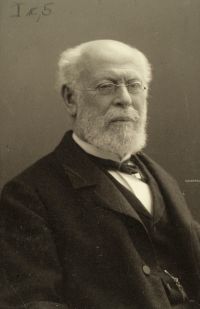
Portrait of Moritz Cantor Moritz Cantor 1911 Encyclopædia Britannica, Volume 28… (1911)

That principle had been made use of by the Greek authors of the classic age; but of later mathematicians only Hero, Diophantus, &c., ventured to regard lines and surfaces as mere numbers that could be joined to give a new number, their sum. It may be that the study of such sums, which he found in the works of Diophantus prompted him to lay it down as a principle that quantities occurring in an equation ought to be homogeneous, all of them lines, or surfaces, or solids, or super solids—an equation between mere numbers being inadmissible.
Source: Wikisource

Portrait of Moritz Cantor Moritz Cantor 1911 Encyclopædia Britannica, Volume 28… (1911)

During the three centuries that have elapsed between Vieta’s day and our own several changes of opinion have taken place on this subject, till the principle has at last proved so far victorious that modern mathematicians like to make homogeneous such equations as are not so from the beginning, in order to get values of a symmetrical shape. Vieta himself, of course, did not see so far as that; nevertheless the merit cannot be denied him of having indirectly suggested the thought. Nor are his writings lacking in actual inventions.
Source: Wikisource

Portrait of Moritz Cantor Moritz Cantor 1911 Encyclopædia Britannica, Volume 28… (1911)

The form of Vieta’s writings is their weak side. He indulged freely in flourishes; and in devising technical terms derived from the Greek he seems to have aimed at making them as unintelligible as possible. None of them, in point of fact, has held its ground, and even his proposal to denote unknown quantities by the vowels A, E, I, O, U, Y—the consonants B, C, &c., being reserved for general known quantities—has not been taken up.
Source: Wikisource

Get perspective with Kwize: daily news enlightened by great literature