Summary

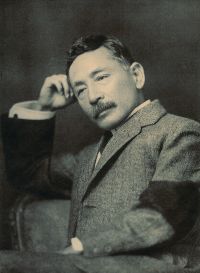
Portrait of Natsume Sōseki Natsume Sōseki I Am a Cat (吾輩は猫である) — Introduction (1906)

There is an understandable tendency for critics of any literature to emphasize the dependence of a writer on his predecessors, but the “game of influences” is all too frequently played with all enthusiasm that leads to an unfair disregard of the writer’s real originality;’ So far as Japan is concerned, there can be no doubt whatsoever that Sōseki’s originality was a main factor in his popular success—but he also has genuine claims to originality in world literature.
Source: Wikisource

Portrait of Natsume Sōseki Natsume Sōseki I Am a Cat (吾輩は猫である) — Introduction (1906)

In yet later chapters the cat’s viewpoint becomes almost totally human, while the object of satire narrows from mankind in general (albeit as exemplified in Meiji, middle-class society) to a concentrated satirization of the particularities of that particular society. By a combination of sheer literary skill and a seemingly endless inventiveness, Sōseki contrived to maintain the vitality of his book throughout eleven chapters and some quarter million words: but one understands why, eventually, he had no choice but to drown his hero.
Source: Wikisource

Portrait of Natsume Sōseki Natsume Sōseki I Am a Cat (吾輩は猫である) — Introduction (1906)

In his mid-teens he switched to a private school for Chinese studies and, though upper-class tradition regarded literature as no more than a civilized diversion, he began to toy with the idea of adopting it as a working profession. However, extensively educated in both the Chinese and the Japanese literary traditions, Sōseki recognized early on the importance of English to any senior career under the westernizing influence of the restored regime and, specifically, to the entry requirements of Tokyo Imperial University—then the only university in the capital.
Source: Wikisource

Get perspective with Kwize: daily news enlightened by great literature