Summary

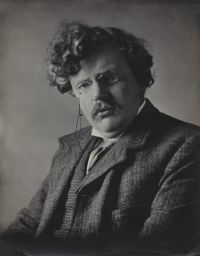
Portrait of Gilbert Keith Chesterton Gilbert Keith Chesterton Heretics — Chapter 15: On Smart Novelists and the Smart Set (1905)

The English lower classes do not fear the English upper classes in the least; nobody could. They simply and freely and sentimentally worship them. The strength of the aristocracy is not in the aristocracy at all; it is in the slums. It is not in the House of Lords; it is not in the Civil Service; it is not in the Government offices; it is not even in the huge and disproportionate monopoly of the English land. It is in a certain spirit. It is in the fact that when a navvy wishes to praise a man, it comes readily to his tongue to say that he has behaved like a gentleman.
Source: Wikisource

Portrait of Gilbert Keith Chesterton Gilbert Keith Chesterton Heretics — Chapter 15: On Smart Novelists and the Smart Set (1905)

The oligarchic character of the modern English commonwealth does not rest, like many oligarchies, on the cruelty of the rich to the poor. It does not even rest on the kindness of the rich to the poor. It rests on the perennial and unfailing kindness of the poor to the rich.
The snobbishness of bad literature, then, is not servile; but the snobbishness of good literature is servile.
Source: Wikisource

Portrait of Gilbert Keith Chesterton Gilbert Keith Chesterton Heretics — Chapter 15: On Smart Novelists and the Smart Set (1905)

The middle and lower orders of London can sincerely, though not perhaps safely, admire the health and grace of the English aristocracy. And this for the very simple reason that the aristocrats are, upon the whole, more healthy and graceful than the poor. But they cannot honestly admire the wit of the aristocrats. And this for the simple reason that the aristocrats are not more witty than the poor, but a very great deal less so. A man does not hear, as in the smart novels, these gems of verbal felicity dropped between diplomatists at dinner.
Source: Wikisource

Get perspective with Kwize: daily news enlightened by great literature