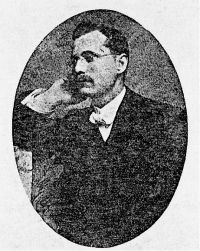
Nephi Anderson

Nephi Anderson

Summary

Portrait of Nephi Anderson Nephi Anderson Purpose in Fiction (1898)

They denounce as inartistic any novel written for the definite purpose of presenting a principle, expressing a truth, or holding up an ideal.
It is hard to see the philosophy of this last proposition. Perhaps a work of fiction wholly purposeless may conform to this strict “law of art;” but surely a story full of purpose, a high, noble purpose may also be in harmony with that art which lifts the soul into the realm of the beautiful. Art deals with beauty, and the highest beauty centers in God. Art deals with love, and God is love. Art deals with truth, and God is the source of all truth.
Source: Wikisource

Portrait of Nephi Anderson Nephi Anderson Purpose in Fiction (1898)

Probably no one denies that the first object of the novel is to amuse and interest the reader. The purpose-novel constitutes a violation of the unwritten contract tacitly existing between writer and reader. A man buys what purports to be a work of fiction, a romance, a story of adventure, pays his money, takes his book home, prepares to enjoy it at his ease, and discovers that he has paid a dollar for somebody’s views on socialism, religion, or the divorce laws.
Source: Wikisource

Portrait of Nephi Anderson Nephi Anderson Purpose in Fiction (1898)

The Latter-day Saint understands that this world is not altogether a play ground, and that the main object of life is not to be amused. He who reaches the people, and the story writer does that, should not lose the opportunity of “preaching,” as the author of “Tom Brown’s School Days” puts it. A good story is artistic preaching. A novel which depicts high ideals and gives to us representations of men and women as they should and can be, exerts an influence for good that is not easily computed.
Source: Wikisource

Get perspective with Kwize: daily news enlightened by great literature