Summary

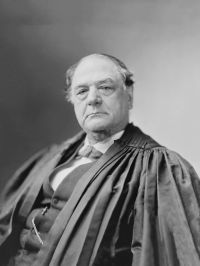
Portrait of Noah Haynes Swayne Noah Haynes Swayne Baker v. Humphrey — Opinion of the Court

Instead of doing this he carefully concealed the facts from Baker, gave Hurds & Smith the choice of buying, and, upon their declining, bought the property for himself, and has since been engaged in a bitter litigation to wrest it from Baker. For his lapse at the outset there might be some excuse, but for his conduct subsequently there can be none. Both are condemned alike by sound ethics and the law. They are the same upon the subject. Actual fraud in such cases is not necessary to give the client a right to redress. A breach of duty is 'constructive fraud,' and is sufficient.
Source: Wikisource

Portrait of Noah Haynes Swayne Noah Haynes Swayne Baker v. Humphrey — Opinion of the Court

It is always dangerous for counsel to undertake to act, in regard to the same thing, for parties whose interests are diverse. Such a case requires care and circumspection on his part. Here there could be no objection, there being no apparent conflict of interests, but upon discovering that the title was imperfect it was the duty of the attorney promptly to report the result to Baker as well as to Hurds & Smith, and to advise with the former, if it were desired, as to the best mode of curing the defect.
Source: Wikisource

Portrait of Noah Haynes Swayne Noah Haynes Swayne Baker v. Humphrey — Opinion of the Court

So if an attorney act deceptive to the prejudice of his client, as if by collusion with the demandant he make default in a real action whereby the land is lost.'
It has been held that if counsel be retained to defend a particular title to real estate he can never thereafter, unless his client consent, buy the opposing title without holding it in trust for those then having the title he was employed to sustain.
Source: Wikisource

Get perspective with Kwize: daily news enlightened by great literature