Summary

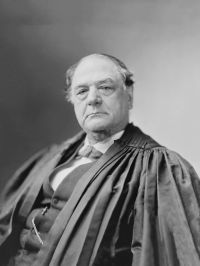
Portrait of Noah Haynes Swayne Noah Haynes Swayne Bechtel v. United States — Opinion of the Court

It will be observed that the language of the second section contained no such restriction. It is general. Its terms are 'in every case of delinquency,' and again, 'the settlement of an account between the United States and an individual.' The act contains seven sections. The fourth, fifth, sixth, and seventh apply indisputably to all debtors of the United States, without discrimination.
Source: Wikisource

Portrait of Noah Haynes Swayne Noah Haynes Swayne Bechtel v. United States — Opinion of the Court

The deduction claimed of ten per cent is allowed by the statute to a purchaser 'who furnishes his own die,' &c. The defendants declined to give any evidence to the jury, and it certainly does not appear by the record that any was adduced on this point. But it is said it was treated by the government at the trial as a conceded fact. There is no such admission here by the counsel of the United States.
Source: Wikisource

Portrait of Noah Haynes Swayne Noah Haynes Swayne Bechtel v. United States — Opinion of the Court

The case was tried by a jury, and a verdict and judgment were rendered for the United States.
Upon the trial, the United States offered in evidence a certified copy of the bond and certified copies of the receipts of Bock. Schneider, & Co. for the stamps, both from the Treasury Department, and a treasury transcript of the account of Bock, Schneider, & Co., showing a balance of $4,400 against them. The defendants objected to this evidence being received, and asked the court to instruct the jury to find in their favor. The court admitted the evidence, and refused the instruction.
Source: Wikisource

Get perspective with Kwize: daily news enlightened by great literature