Summary

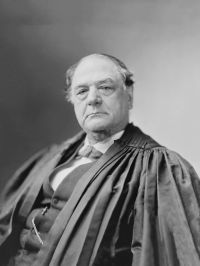
Portrait of Noah Haynes Swayne Noah Haynes Swayne Canal Company v. Gordon — Opinion of the Court

We shall confine our opinion to the objections to the decree, taken in the argument for the appellants. According to the rule of this court, the appellee can ask nothing here but what the decree gave him. It is the appellants who complain. The questions which we are to examine are such as they present for our consideration. The position of an appellee in this court is simply defensive. It is only where both parties appeal, that a case is open here for examination as it was in the court below.
The bill was filed to enforce a particular lien given by a statute of California.
Source: Wikisource

Portrait of Noah Haynes Swayne Noah Haynes Swayne Canal Company v. Gordon — Opinion of the Court

It severed the connection of Kinyon with the contract, and extinguished any claim which he might otherwise have had to be heard in this litigation. He can have no interest in the result, whatever it may be. Complete justice can be done between the parties before us, and the whole case disposed of without his presence in the record. He is, therefore, not an indispensable party.
Source: Wikisource

Portrait of Noah Haynes Swayne Noah Haynes Swayne Canal Company v. Gordon — Opinion of the Court

It is urged that the decree is erroneous in holding that the lien extended the entire length of the canal instead of limiting it to the upper section, where all the work was done. Is this objection well taken? Liens of this kind were unknown in the common law and equity jurisprudence both of England and of this country. They were clearly defined and regulated in the civil law. #fn-s-s [1] Where they exist in h is country they are the creatures of local legislation. They are governed in everything by the statutes under which they arise.
Source: Wikisource

Get perspective with Kwize: daily news enlightened by great literature