Summary

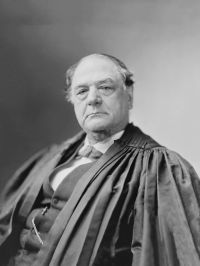
Portrait of Noah Haynes Swayne Noah Haynes Swayne Hall v. United States (92 U.S. 27…

Hall was sent to the plantation in 1844, and remained there as the slave of Roach's father until the latter's death in 1847, and after that as the slave of the claimant Roach, who succeeded to the estate of his father, and remained there until after the cotton in question was seized in 1863. He was treated all the time as a slave, fed and clothed by his master, and worked with the other slaves, sometimes as a field-hand, and at others as a stock-minder.
Source: Wikisource

Portrait of Noah Haynes Swayne Noah Haynes Swayne Hall v. United States (92 U.S. 27…

It is admitted that the cotton belonged originally to Roach. It is clear, therefore, that the claim on behalf of his estate must prevail, unless Hall, the adverse claimant, has shown a better title. Hence it is unnecessary to remark further in regard to the title asserted by the executrix. The United States have no interest in the controversy. The government is merely a fund-holder for the benefit of the one of the two other parties who shall succeed in this litigation. The controversy turns upon the claim of Hall, and our remarks will be confined to that subject.
Source: Wikisource

Get perspective with Kwize: daily news enlightened by great literature