Summary

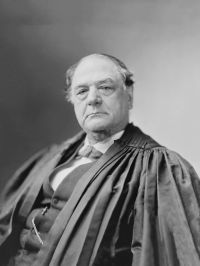
Portrait of Noah Haynes Swayne Noah Haynes Swayne Meyer v. City of Muscatine — Opinion of the Court

To establish fire companies, and provide them with engines, is a proper and indeed a necessary object to which the money or the credit of the city may be applied. The building of wharves also requires more money than can be well levied at one tax in such a town as Muscatine. And in building school-houses, and other expenditures necessary to establish schools, the citizens may well be consulted, whether the credit of the city may be used.
Source: Wikisource

Portrait of Noah Haynes Swayne Noah Haynes Swayne Meyer v. City of Muscatine — Opinion of the Court

This construction would authorize the city to borrow money to enter into the banking business, to speculate in gold, or flour, or grain, or to establish mercantile houses, or to build steamboats, and enter into the trade which flows past the city, on the waters of the Mississippi River, or to organize mining companies in Colorado. In short, to take the money or property of the citizen against his will, and employ it in any of the diversified pursuits by which the individual man makes, or fails to make, money.
Source: Wikisource

Portrait of Noah Haynes Swayne Noah Haynes Swayne Meyer v. City of Muscatine — Opinion of the Court

In the case now before us, however, it is not claimed that there was any act of the legislature authorizing the city of Muscatine to take stock in railroad companies. The principle on which the validity of the bonds is sustained is, that the charter of the city confers on it an unlimited right to borrow money, and that having issued its bonds, which have been sold in the market, they must be held to be valid, although the purchaser knew they were issued for railroad stock.
Source: Wikisource

Get perspective with Kwize: daily news enlightened by great literature