Summary

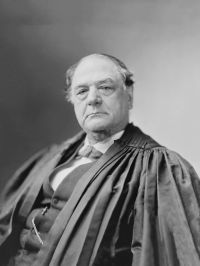
Portrait of Noah Haynes Swayne Noah Haynes Swayne Smith v. Vodges — Opinion of the Court

In order to defeat a settlement made by a husband upon his wife, it must be intended to defraud existing creditors, or creditors whose rights are expected shortly to supervene, or creditors whose rights may and do so supervene; the settler purposing to throw the hazards of business in which he is about to engage upon others, instead of honestly holding his means subject to the chance of those adverse results to which all business enterprises are liable.
Source: Wikisource

Portrait of Noah Haynes Swayne Noah Haynes Swayne Smith v. Vodges — Opinion of the Court

In the early part of 1867, there was a marked reflux in the tide of prosperity throughout the country. It swept many of those exposed to it into hopeless insolvency. The bankrupt became embarrassed and depressed. His wife proposed to relieve him by making a loan of $4,000, to be secured by a mortgage upon the property in question. This suggestion was carried out. The loan was made and the mortgage given in March, 1867. The money was paid over to his creditors. This enabled him for a time to weather the storm. But times grew worse. The shrinking in the value of dry-goods was immense.
Source: Wikisource

Portrait of Noah Haynes Swayne Noah Haynes Swayne Smith v. Vodges — Opinion of the Court

The loan replaced the amount paid for the ground-rent, with an excess of $1,000; and it equalled the amount paid for both the property originally and in extinguishment of the ground-rent, less $450.
We hold the transactions both as to the ground-rent and the original purchase to have been honest and valid.
Where money has been misappropriated, the general rule of equity is, that those wronged may pursue it as far as it can be traced, and may elect to take the property in which it has been invested, or to recover the money.
Source: Wikisource

Get perspective with Kwize: daily news enlightened by great literature