Summary

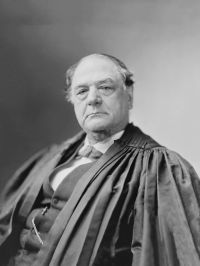
Portrait of Noah Haynes Swayne Noah Haynes Swayne Supervisors v. United States (71 U.S. 435…

The counsel for the respondent insists, with zeal and ability, that the authority thus given involves no duty; that it depends for its exercise wholly upon the judgment of the supervisors, and that judicial action cannot control the discretion with which the statute has clothed them. We cannot concur in this view of the subject. Great stress is laid by the learned counsel upon the language, 'may, if deemed advisable,' which accompanies the grant of power, and, as he contends, qualifies it to the extent assumed in his argument.
Source: Wikisource

Portrait of Noah Haynes Swayne Noah Haynes Swayne Supervisors v. United States (71 U.S. 435…

An examination of authorities will show that disputed facts are necessary to found a 'discretion,' or a 'deliberative judgment,' (in the sense used in the authorities) upon. In the case of The People v. Supreme Court of New York, [5] the nature of a 'discretion' that cannot be controlled by the courts is discussed. The court says:
'It is that discretion which is not and cannot be governed by any fixed rules. We will not act upon our judgment in opposition to the judgment of a board of supervisors as to what is a reasonable compensation for services performed by a constable.
Source: Wikisource

Portrait of Noah Haynes Swayne Noah Haynes Swayne Supervisors v. United States (71 U.S. 435…

The conclusion to be deduced from the authorities is, that where power is given to public officers, in the language of the act before us, or in equivalent language-whenever the public interest or individual rights call for its exercise-the language used, though permissive in form, is in fact peremptory. What they are empowered to do for a third person the law requires shall be done. The power is given, not for their benefit, but for his.
Source: Wikisource

Get perspective with Kwize: daily news enlightened by great literature