Summary

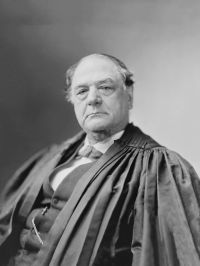
Portrait of Noah Haynes Swayne Noah Haynes Swayne United States v. Hartwell — Opinion of the Court

We are not unmindful that penal laws are to be construed strictly. It is said that this rule is almost as old as construction itself. But whenever invoked it comes attended with qualifications and other rules no less important. It is by the light which each contributes that the judgment of the court is to be made up. The object in construing penal, as well as other statutes, is to ascertain the legislative intent. That constitutes the law. If the language be clear it is conclusive. There can be no construction where there is nothing to construe.
Source: Wikisource

Portrait of Noah Haynes Swayne Noah Haynes Swayne United States v. Hartwell — Opinion of the Court

The employment of the defendant was in the public service of the United States. He was appointed pursuant to law, and his compensation was fixed by law. Vacating the office of his superior would not have affected the tenure of his place. His duties were continuing and permanent, not occasional or temporary. They were to be such as his superior in office should prescribe.
A government office is different from a government contract.
Source: Wikisource

Portrait of Noah Haynes Swayne Noah Haynes Swayne United States v. Hartwell — Opinion of the Court

It must not be defeated by a forced and over-strict construction. The rule does not exclude the application of common sense to the terms made use of in the act in order to avoid an absurdity, which the legislature ought not to be presumed to have intended. When the words are general and include various classes of persons, there is no authority which would justify a court in restricting them to one class and excluding others, where the purpose of the statute is alike applicable to all.
Source: Wikisource

Get perspective with Kwize: daily news enlightened by great literature