Summary

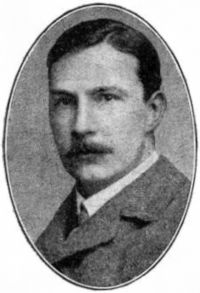
Portrait of Oliver Onions Oliver Onions Back o' the Moon, and Other Stories… (1906)

Wadsworth Shelf had been steep; Wadsworth Street was precipitous; and at the head of the street rose Wadsworth Scout, dark and mountainous. The Scout was thinly wooded here and there with birch and mountain-ash. It overshadowed the village beneath it; and as the parson reached the small square at its foot he saw, over an irregular row of roofs, the squat belfry of the little church that was now his charge. A ramshackle inn, with a long horse-trough in front of it, occupied the lower side of the square.
Source: Wikisource

Portrait of Oliver Onions Oliver Onions Back o' the Moon, and Other Stories… (1906)

The best part of a winter might pass and a Holdsworth man would not be seen in Brotherton nor a Brotherton man in Booth; while Fluett, save for the Pack Causeway that, creeping by a roundabout route out of Horwick, gained the high land and crossed the whole district, would have been utterly isolated. One geographical fact especially impressed the parson: that was, that the nature of the country had determined the passing of special Acts of Parliament for the protection of the weavers of Back o' th' Mooin.
Source: Wikisource

Portrait of Oliver Onions Oliver Onions Back o' the Moon, and Other Stories… (1906)

A man could not, up and down such a country, carry on his back more than three or four stone of cloth. He was thus under certain disabilities as compared with those in the valleys; and it had been necessary to limit by enactment the buying-powers of the Horwick merchants, in order that the occupation of the three-and four-stone men should not be entirely gone.
Source: Wikisource

Get perspective with Kwize: daily news enlightened by great literature