Summary

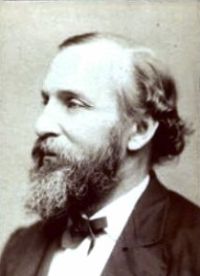
Portrait of Oliver Optic Oliver Optic Careless Kate: A Story for Little Folks

It is just so with your conscience—your power to tell right from wrong. While you keep it up straight, it works well, and never wears out. But when it gets a little out of order, it grows worse very fast, and is not of much more value than a lighthouse without any light in it.
Kate's conscience had be [Pg 51] gun to sag over on one side. It was growing weak, and did not remind her of her wrong deeds with force enough to make itself heeded. If she could only escape the reproof of her mother, she did not care.
Source: Gutenberg

Portrait of Oliver Optic Oliver Optic Careless Kate: A Story for Little Folks

Lamb.
"I didn't mean to, mother," replied Kate.
"But you were careless, as you always are. Will you never learn to be careful? You walk about the flower beds as though they were solid rocks." [Pg 14]
"I did not mean to tread upon it," was all that poor Kate could say.
It was very true that she did not mean to spoil the peony; but it was almost as bad to ruin it by being careless. Children ought to understand that not meaning to do wrong is not a good excuse, when the wrong might have been prevented by being careful.
Source: Gutenberg

Portrait of Oliver Optic Oliver Optic Careless Kate: A Story for Little Folks

I will carry them the milk, though it is rather late, and probably they are all asleep by this time." [Pg 82]
"But will you forgive me, father and mother?"
"Freely, my child; you have suffered severely already for your fault, and I hope it will be a lesson to you which will last as long as you live," said her father.
"It will," said Kate, earnestly.
Both her parents kissed her, in token of their forgiveness; and Mr. Lamb put on his coat, while Mrs. Lamb [Pg 83] went to the cellar for a pail of milk, with which he soon left the house on his errand of kindness and charity.
Source: Gutenberg

Get perspective with Kwize: daily news enlightened by great literature