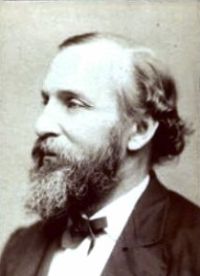
Oliver Optic

Oliver Optic

Uncle Ben (1862)

Summary

Portrait of Oliver Optic Oliver Optic,  Uncle Ben (1862)

“ The canvas had been left open at the head, and the wind blew the fair brown locks upon the cold brow of poor George, just as when he had stood by my side on the cross-trees.
“One by one the sailors kissed his marble cheeks,—kissed [Pg 89] him for his mother,—and wiped the tears from their brown faces. The canvas was sewed up, the word was given, and the body slid off the plank into the great ocean, there to sleep till the graves give up their dead.
“The ship filled away upon her course, and it was many and many a day before we ceased to think of the poor sailor boy in his ocean grave.
”
Source: Gutenberg

Portrait of Oliver Optic Oliver Optic,  Uncle Ben (1862)

“ When the men on deck hear this cry, they find out where the whale is, and then get out the boats and go after him. They row up to the huge monster of the deep with very little noise, and then throw one or two harpoons into him.
“A harpoon is a kind of iron spear, with a wooden handle, to which a long rope is fastened. When the whale [Pg 58] feels the iron, he dives down into the deep, or runs away as fast as he can. Sometimes he drags the boat after him at a frightful speed, for many miles; and it often happens that the men in the boat have to cut the line, in order to saves their lives.
”
Source: Gutenberg

Portrait of Oliver Optic Oliver Optic,  Uncle Ben (1862)

“ When the whale is weak from loss of blood, and tired out, the boat again steals upon him, and a long lance is thrust [Pg 59] into his body. This kills him, if it is well done.
“Very often, when the men attack the whale, he turns upon the boat, and breaks it all to pieces with a single slap of his tail, or crushes it all to bits in his monstrous mouth. The sailors always have a hard time, and are often killed, in their efforts to conquer the whale.
“When they get the whale [Pg 60] alongside the ship, they cut out the fat, or ‘blubber,’ in long strips, and hoist it on board the vessel.
”
Source: Gutenberg

Get perspective with Kwize: daily news enlightened by great literature