Summary

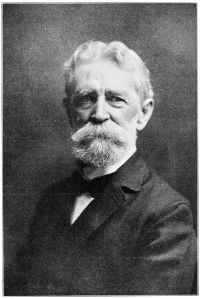
Portrait of Otis Tufton Mason Otis Tufton Mason Throwing-sticks in the National Museum

It is hardly to be supposed that the simplest type, that of Anderson River, was invented at once in its present form, for the Australian form is ruder still, having neither hole for the index finger nor groove for the weapon shaft. When we recall that the chief benefit conferred by the throwing-stick is the ability to grasp firmly and launch truly a greasy weapon from a cold hand, we naturally ask, have the Eskimo any other device for the same purpose?
Source: Gutenberg

Portrait of Otis Tufton Mason Otis Tufton Mason Throwing-sticks in the National Museum

The Eskimo spend much time in their skin kyaks, from which it would be difficult to launch an arrow from a bow, or a harpoon from the unsteady, cold, and greasy hand. This device of the throwing-stick, therefore, is the substitute for the bow or the sling, to be used in the kyak, by a people who cannot procure the proper materials for a heavier lance-shaft, or at least whose environment is prejudicial to the use of such a weapon.
Source: Gutenberg

Portrait of Otis Tufton Mason Otis Tufton Mason Throwing-sticks in the National Museum

The most perfect throwing-stick of all is that of the Mahlemut, in Norton Sound, in which are present the handle, thumb-groove, finger-grooves, and pegs, cavities for the finger-tips, index finger cavity, shaft-groove, and hook for the harpoon. In short, all the characteristics present on the rest are combined here.
Classifications of these implements may be varied according to the organ selected. As to the hook for the attachment of the weapon, in Greenland this is on the shaft, in all other parts of the world it is on the throwing-stick.
Source: Gutenberg

Get perspective with Kwize: daily news enlightened by great literature