Summary

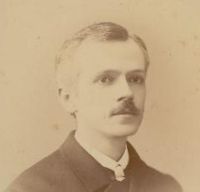
Portrait of James Owen Dorsey James Owen Dorsey Omaha Dwellings, Furniture and Implements

The primitive domiciles of the Omaha were chiefly (1) lodges of earth or, more rarely, of bark or mats, and (2) skin lodges or tents. It may be observed that there were no sacred rites connected with the earth lodge-building or tent-making among the Omaha and Ponka.
Earth Lodges.
When earth lodges were built, the people did not make them in a tribal circle, each man erecting his lodge where he wished; yet kindred commonly built near one another.
Source: Gutenberg

Portrait of James Owen Dorsey James Owen Dorsey Omaha Dwellings, Furniture and Implements

The earth lodges were made by the women, and were intended principally for summer use, when the people were not migrating or going on the hunt. Those built by the Omaha and Ponka were constructed in the following manner: The roof was supported by two series of vertical posts, forked at the top for the reception of the transverse connecting pieces of each series. The number in each series varied according to the size of the lodge; for a small lodge only four posts were erected in the inner series, for an ordinary lodge eight were required, and ten generally constituted the maximum.
Source: Gutenberg

Portrait of James Owen Dorsey James Owen Dorsey Omaha Dwellings, Furniture and Implements

Fig. 326.—Omaha war arrow.
The war arrow (b) differed from that used in hunting in having a barbed point, which was very slightly attached to the shaft, so that if it penetrated the body of an enemy it could not be withdrawn without leaving the point in the wound.
Children used the hidé-ʇece, or target arrow, when they began to learn the use of the bow. With this a boy could kill small birds and animals.
The Ponka used to make arrowshafts (mansa) of jan-′qude-hí, "gray wood," juneberry wood, which grew in their country, but is not found among the Omaha.
Source: Gutenberg

Get perspective with Kwize: daily news enlightened by great literature