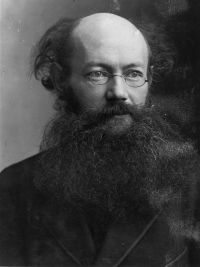
Peter Alexeivitch Kropotkin

Peter Alexeivitch Kropotkin

Summary

Portrait of Peter Alexeivitch Kropotkin Peter Alexeivitch Kropotkin 1911 Encyclopædia Britannica, Volume 7… (1911)

Those on active service are divided into three equal parts according to age, and the first third only is in real service, while the two others stay at home, but are bound to march out as soon as an order is given. The officers are supplied in the usual way by the military schools, in which all Cossack voiskos have their own vacancies, or are non-commissioned Cossack officers, with officers’ grades. In return for this service the Cossacks have received from the state considerable grants of land for each voisko separately.
Source: Wikisource

Portrait of Peter Alexeivitch Kropotkin Peter Alexeivitch Kropotkin 1911 Encyclopædia Britannica, Volume 7… (1911)

They have more schools and a greater proportion of their children go to school. In addition to agriculture, which (with the exception of the Usuri Cossacks) is sufficient to supply their needs and usually to leave a certain surplus, they carry on extensive cattle and horse breeding, vine culture in Caucasia, fishing on the Don, the Ural, and the Caspian, hunting, bee-culture, &c. The extraction of coal, gold and other minerals which are found on their territories is mostly rented to strangers, who also own most factories.
Source: Wikisource

Get perspective with Kwize: daily news enlightened by great literature