Summary

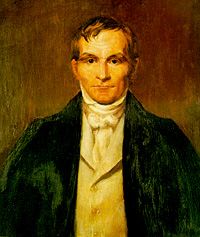
Portrait of Philip Pendleton Barbour Philip Pendleton Barbour Georgetown v. Alexandria Canal Company…

The court of equity, also, pursuing the analogy of the law, that a party may maintain a private action for special damage, even in case of a public nuisance, will now take jurisdiction in case of a public nuisance, at the instance of a private person; where he is in imminent danger of suffering a special injury, for which, under the circumstances of the case, the law would not afford an adequate remedy.
Source: Wikisource

Portrait of Philip Pendleton Barbour Philip Pendleton Barbour Georgetown v. Alexandria Canal Company…

The obstruction was not only a common or public nuisance, but worked a special injury to the plaintiffs.
The principle then is, that in case of public nuisance, where a bill is filed by a private person, asking for relief by way of prevention, the plaintiff cannot maintain a stand in a court of equity; unless he avers and proves some special injury.
With this principle as our guide, let us now examine the pretensions of the appellants in this case. Who are they? Not, indeed, a private person, but a corporation. They profess to come into court for themselves, and for the citizens of Georgetown.
Source: Wikisource

Portrait of Philip Pendleton Barbour Philip Pendleton Barbour Georgetown v. Alexandria Canal Company…

Were it even admitted that the Canal Company had exceeded the authority under which they are acting, nevertheless, as the Potomac river is a navigable stream, a part of the jus publicum, any obstruction to its navigation would, upon the most established principles, be what is declared by law to be a public nuisance. A public nuisance being the subject to criminal jurisdiction, the ordinary and regular proceeding at law is by indictment or information, by which the nuisance may be abated
Source: Wikisource

Get perspective with Kwize: daily news enlightened by great literature