Summary

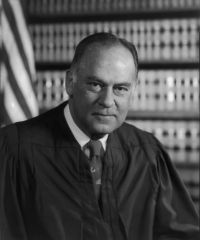
Portrait of Potter Stewart Potter Stewart Beacon Theaters, Inc. v. Westover…

The availability of a declaratory judgment did not, therefore, operate to confer upon Beacon the right to trial by jury with respect to the issues raised by the complaint.
The Court's opinion does not, of course, hold or even suggest that a court of equity may never determine 'legal rights.' For indeed it is precisely such rights which the Chancellor, when his jurisdictio has been properly invoked, has often been called upon to decide. Issues of fact are rarely either 'legal' or 'equitable.' All depends upon the context in which they arise.
Source: Wikisource

Portrait of Potter Stewart Potter Stewart Beacon Theaters, Inc. v. Westover…

Assuming the existence of a factual issue common both to the plaintiff's original action and the defendant's counterclaim for damages, I cannot agree that the District Court must be compelled to try the counterclaim first. [4] It is, of course, a matter of no great moment in what order the issues between the parties in the present litigation are tried. What is disturbing is the process by which the Court arrives at its decision-a process which appears to disregard the historic relationship between equity and law.
Source: Wikisource

Portrait of Potter Stewart Potter Stewart Beacon Theaters, Inc. v. Westover…

If the basic issues in an action for declaratory relief are of a kind traditionally cognizable in equity, e.g., a suit for cancellation of a written instrument, the declaratory judgment is not a 'remedy at law.' [5] If, on the other hand, the issues arise in a context traditionally cognizable at common law, the right to a jury trial of course remains unimpaired, even though the only relief demanded is a declaratory judgment.
Source: Wikisource

Get perspective with Kwize: daily news enlightened by great literature