Summary

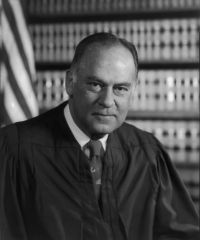
Portrait of Potter Stewart Potter Stewart Massiah v. United States — Opinion of the Court

By prearrangement with Colson, and totally unbeknown to the petitioner, the agent Murphy sat in a car parked out of sight down the street and listened over the radio to the entire conversation. The petitioner made several incriminating statements during the course of this conversation. At the petitioner's trial, these incriminating statements were brought before the jury through Murphy's testimony, despite the insistent objection of defense counsel. The jury convicted the petitioner of several related narcotics offenses, and the convictions were affirmed by the Court of Appeals.
Source: Wikisource

Portrait of Potter Stewart Potter Stewart Massiah v. United States — Opinion of the Court

A few days later, and quite without the petitioner's knowledge, Colson decided to cooperate with the government agents in their continuing investigation of the narcotics activities in which the petitioner, Colson, and others had allegedly been engaged. Colson permitted an agent named Murphy to install a Schmidt radio transmitter [p203] under the front seat of Colson's automobile, by means of which Murphy, equipped with an appropriate receiving device, could overhear from some distance away conversations carried on in Colson's car.
Source: Wikisource

Portrait of Potter Stewart Potter Stewart Massiah v. United States — Opinion of the Court

Ever since this Court's decision in the Spano case, the New York courts have unequivocally followed this constitutional [p205] rule.
Any secret interrogation of the defendant, from and after the finding of the indictment, without the protection afforded by the presence of counsel, contravenes the basic dictates of fairness in the conduct of criminal causes and the fundamental rights of persons charged with crime. People v.
Source: Wikisource

Get perspective with Kwize: daily news enlightened by great literature