Summary

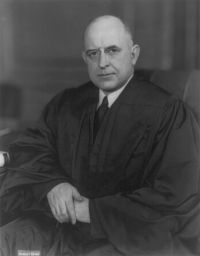
Portrait of Stanley Forman Reed Stanley Forman Reed Pollard v. United States — Opinion of the Court

Our law, based upon centuries of tragic human experience, requires that before a man can be sent to a penitentiary, he is entitled to a speedy trial, to be present in court at every step of the proceedings, at all times to be represented by counsel, or to speak in his own behalf, and to be informed in open court of every action taken against him until he is lawfully sentenced.
Source: Wikisource

Portrait of Stanley Forman Reed Stanley Forman Reed Pollard v. United States — Opinion of the Court

These are not mere ceremonials to be neglected at will in the interests of a crowded calendar or other expediencies. They are basic rights. They bulk large in the totality of procedural rights guaranteed to a person accused of crime. Here, in the case of an impecunious defendant, who was summarily rushed through the court mill without benefit of counsel, all of them, in some degree, were denied him.
The petitioner was not a dangerous criminal. His trouble, as the court recognized, was intemperance.
Source: Wikisource

Portrait of Stanley Forman Reed Stanley Forman Reed Pollard v. United States — Opinion of the Court

The possibility of consequences collateral to the imposition of sentence is sufficiently substantial to justify our dealing with the merits. [1]
The petition for certiorari, pro se, sought reversal of the order of the Court of Appeals denying petitioner's motion for appeal in forma pauperis and also release from his then incarceration. [2] Petitioner contended that the 1954 sentence was unconstitutional because it was imposed for violation of the invalid probation order.
Source: Wikisource

Get perspective with Kwize: daily news enlightened by great literature