Summary

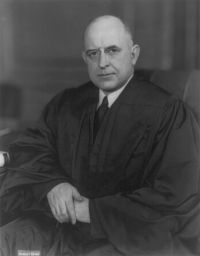
Portrait of Stanley Forman Reed Stanley Forman Reed Gibbs v. Burke — Opinion of the Court

He knows the essentials of a fair trial. The primary duty falls on him to determine the accused's need of counsel at arraignment and during trial. He may guide a defendant without a lawyer past the errors that make trials unfair. Cf. Uveges v. Pennsylvania, supra. Failure to protect properly the rights of one accused of serious offenses is unusual. Obviously a fair trial test necessitates an appraisal before and during the trial of the facts of each case to determine whether the need for counsel is so great that the deprivation of the right to counsel works a fundamental unfairness.
Source: Wikisource

Portrait of Stanley Forman Reed Stanley Forman Reed Gibbs v. Burke — Opinion of the Court

Our decisions have been that where the ignorance, youth, or other incapacity of the defendant made a trial without counsel unfair, the defendant is deprived of his liberty contrary to the Fourteenth Amendment. [12] Counsel necessary for his adequate defense would be lacking.
Respondent argues that to hold to such precedents leaves the state prosecuting authorities uncertain as to whether to offer counsel to all accused who are without adequate funds and under serious charges in state courts. We cannot offer a panacea for the difficulty.
Source: Wikisource

Get perspective with Kwize: daily news enlightened by great literature