Summary

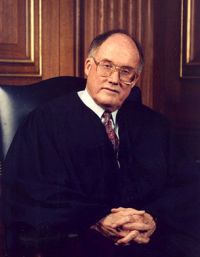
Portrait of William Rehnquist William Rehnquist Mu'Min v. Virginia — Opinion of the Court

While concern for the feelings and sensibilities of potential jurors cannot be allowed to defeat inquiry necessary to protect a constitutional right, we do not believe that "content" questions are constitutionally required.
Whether a trial court decides to put questions about the content of publicity to a potential juror or not, it must make the same decision at the end of the questioning: is this juror to be believed when he says he has not formed an opinion about the case?
Source: Wikisource

Portrait of William Rehnquist William Rehnquist Mu'Min v. Virginia — Opinion of the Court

Ross, supra, we held that the Constitution does not require a state court trial judge to question prospective jurors as to racial prejudice in every case where the races of the defendant and the victim differ, but in Turner v. Murray, supra, we held that in a capital case involving a charge of murder of a white person by a black defendant such questions must be asked.
We enjoy more latitude in setting standards for voir dire in federal courts under our supervisory power than we have in interpreting the provisions of the Fourteenth Amendment with respect to voir dire in state courts.
Source: Wikisource

Portrait of William Rehnquist William Rehnquist Mu'Min v. Virginia — Opinion of the Court

But, two parallel themes emerge from both sets of cases: first, the possibility of racial prejudice against a black defendant charged with a violent crime against a white person is sufficiently real that the Fourteenth Amendment requires that inquiry be made into racial prejudice; second, the trial court retains great latitude in deciding what questions should be asked on voir dire.
Source: Wikisource

Get perspective with Kwize: daily news enlightened by great literature