Summary

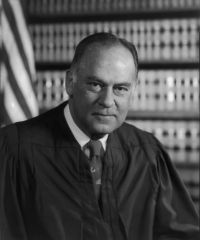
Portrait of Potter Stewart Potter Stewart Shapiro v. Thompson — Concurrence (1969)

The Court today does not 'pick out particular human activities, characterize them as 'fundamental,' and give them added protection * * *.' To the contrary, the Court simply recognizes, as it must, an established constitutional right, and gives to that right no less protection than the Constitution itself demands.
'The constitutional right to travel from one State to another * * * has been firmly established and repeatedly recognized.' United States v.
Source: Wikisource

Portrait of Potter Stewart Potter Stewart Shapiro v. Thompson — Concurrence (1969)

Secretary of State, 378 U.S. 500, 505-506, 84 S.Ct. 1659, 1663, 12 L.Ed.2d 992. As such, this 'right,' the Court has held, can be regulated within the bounds of due process. Zemel v. Rusk, 381 U.S. 1, 85 S.Ct. 1271, 14 L.Ed.2d 179.
2 The constitutional right of interstate travel was fully recognized long before adoption of the Fourteenth Amendment. See the statement of Chief Justice Taney in the Passenger Cases. 7 How. 283, 492, 12 L.Ed. 702:
'For all the great purposes for which the Federal government was formed, we are one people, with one common country.
Source: Wikisource

Get perspective with Kwize: daily news enlightened by great literature