Summary

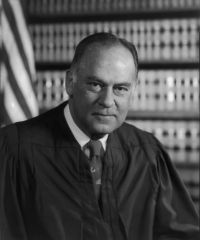
Portrait of Potter Stewart Potter Stewart United States v. American-foreign Steamship Cor…

The reason for such a provision is not hard to discern. Congress would hardly have required a retired circuit judge to return to the bench to attend at an en banc hearing and, as between leaving the matter to the discretion of the individual judge and limiting the court to active judges, it is not surprising-in view of the varying degrees of judicial activity of the retired judges, and the administrative undesirability of having, for these purposes, a court of unpredictable size and complement-that Congress should have chosen the latter course.
Source: Wikisource

Portrait of Potter Stewart Potter Stewart United States v. American-foreign Steamship Cor…

Here we are concerned only with the specific provision of the Judicial Code which ordains that en banc proceedings shall be 'heard and determined' by a court consisting of all the 'active circuit judges' of the circuit involved. The literal meaning of the words seems plain enough. An 'active' judge is a judge who has not retired 'from regular active service.' 28 U.S.C. § 371 (b) , 28 U.S.C.A. § 371 (b) . A case or controversy is 'determined' when it is decided.
Source: Wikisource

Portrait of Potter Stewart Potter Stewart United States v. American-foreign Steamship Cor…

As a preliminary to decision of the precise question before us it is important to make clear that this case in no way involves the eligibility of a retired judge to participate in the hearing, rehearing or determination of a case as a member of a conventional three-judge Court of Appeals. Such participation is governed by different statutory provisions. The Judicial Code explicitly provides that 'judges designated or assigned' shall be 'competent to sit as judges' of such a court.
Source: Wikisource

Get perspective with Kwize: daily news enlightened by great literature