Summary

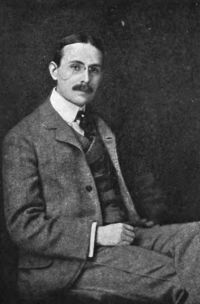
Portrait of Ralph Henry Barbour Ralph Henry Barbour For the Freedom of the Seas — Chapter 10 (1918)

The Gyendotte heeled under its assault until Nelson was flattened against the rail. Its voice was a roar between the funnels and a demoniacal shriek in the rigging. Far above him the wireless aerial whistled shrilly. The wind was a blast from the icy reaches of the Greenland Sea and his clutching fingers inside the wet gloves stiffened and numbed. He was heartily glad that his relief would come soon and that he could tuck himself in his hammock, even though it seemed doubtful that sleep would come to many that night.
Source: Wikisource

Portrait of Ralph Henry Barbour Ralph Henry Barbour For the Freedom of the Seas — Chapter 10 (1918)

At seven bells Nelson was on lookout duty, a life-vest strapped around his body and everything but his face hidden by rubber garments. His station was near the waist and, fortunately or unfortunately, according to one's view of subsequent events, on the starboard. Behind him, affording partial shelter from wind and flying spray, arose one of the high funnels, while, above him, a whale-boat, one of the few small boats carried in time of war, lurched against the gloom of the sky.
Source: Wikisource

Portrait of Ralph Henry Barbour Ralph Henry Barbour For the Freedom of the Seas — Chapter 10 (1918)

On the Gyandotte it was pretty unanimously the opinion that the submarines had tackled a "man's job," and that those aboard them were "regular fellows." For the first two days it was customary to ask of a morning: "Have we still got 'em all? But the subs themselves appeared to neither ask nor expect sympathy. They went at their task with a fine nonchalance, plowing along sturdily and steadily at some twelve knots an hour, sometimes hidden from sight beyond the seas that tumbled them, always dripping from end to end.
Source: Wikisource

Get perspective with Kwize: daily news enlightened by great literature