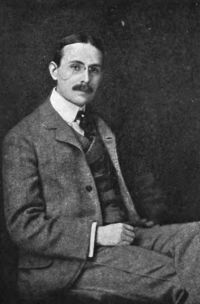
Ralph Henry Barbour

Ralph Henry Barbour

Summary

Portrait of Ralph Henry Barbour Ralph Henry Barbour The Lucky Seventh

And yet even with a runner on second and only a hit necessary to bring in a tally, it began to look as if once more the hopes of Clearfield’s supporters were doomed. Lanny, determined and cool, after waiting until he had three balls to his credit and no strikes, tried to drop out of the way of a close one, only to have it hit his bat and roll fair! Mason fielded it to first, and there was one out. The incessant shouting from the spectators died away and Gordon, coaching at first, swung on his heel and kicked viciously at a pebble to relieve his feelings.
Source: Gutenberg

Portrait of Ralph Henry Barbour Ralph Henry Barbour The Lucky Seventh

It was Gordon who finally broke the stillness.
“Some moon,” he said dreamily.
“Great!” agreed Lanny. “You can see the man in it plainly to-night.”
“Supposing,” said Fudge thoughtfully, “supposing you were terribly big, miles and miles high, and you had a frightfully huge bat, couldn’t you get a d-d-dandy swipe at it!”
“You could make a home run, Fudge!” laughed Lanny. “Only you’d have to hit pretty quick. Why, if you were tall enough to reach the moon, it would be going past you faster than one of Tom’s straight ones, Fudge!”
Source: Gutenberg

Portrait of Ralph Henry Barbour Ralph Henry Barbour The Lucky Seventh

He always appeared to have a quarrel with someone or something. Sometimes it was the teachers at High School, who were imposing on him; once it had been the baseball coach, Mr. Farrel, who, according to Morris, was keeping him off the team for spite, and now it was with his father. It would seem, then, that the possession of much wealth didn’t always bring contentment. There was Dick Levering, who was not only poor but a cripple as well, and who was absolutely the most cheerful and contented fellow of all Gordon’s acquaintances.
Source: Gutenberg

Get perspective with Kwize: daily news enlightened by great literature