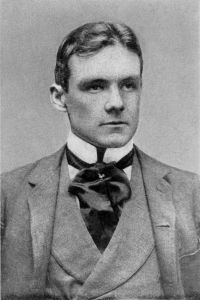
 Richard Harding Davis,
The Lost Road (collection) — The Miracle of Las Palmas
(1913)
Richard Harding Davis,
The Lost Road (collection) — The Miracle of Las Palmas
(1913)
“ Aintree knew why she was going, knew she had lost faith and patience, knew the woman he loved had broken with him and put him out of her life. Appalled at this calamity, he proceeded to get drunk in earnest. The night was very hot and the humidity very heavy, and at Las Palmas inside the bungalow that served as a police-station the lamps on either side of the lieutenant's desk burned like tiny furnaces. Between them, panting in the moist heat and with the sweat from his forehead and hand dripping upon an otherwise immaculate report, sat Standish. ”
