Summary

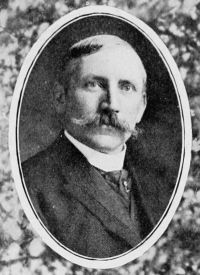
Portrait of Richard Kearton Richard Kearton Birds' Nests, Eggs and Egg-Collecting

Because we are unable to find any protective colouration in the plumage of a bird, its eggs or nest, we must not conclude that such peculiarity is a mere accident or useless decoration, for it either serves some wise end unknown to us, or has done so in far past ages, and is perpetuated because its possession is not distinctly harmful, and may at some future date be again called into requisition against danger. The extinction of nearly all birds whose existence is reasonably well-known has not been due to natural causes, but to man or the influence his civilisation has introduced.
Source: Gutenberg

Portrait of Richard Kearton Richard Kearton Birds' Nests, Eggs and Egg-Collecting

It is more honest to acknowledge our ignorance than to fence it round by speculative theory or cover it by almost meaningless phrases. Survival of the fittest is undoubtedly Nature's great law. With this end in view she governs and regulates the actions of birds in exactly the same way as she controls the colour and character of their plumage, shape, size, tint, and number of their eggs, first movements of their young, and other peculiarities we do not understand.
Source: Gutenberg

Portrait of Richard Kearton Richard Kearton Birds' Nests, Eggs and Egg-Collecting

The Chaffinch generally builds her nest in the forks of trees covered with lichens; it is made of moss, wool, and lichen, the inside being lined with hair and feathers. She makes a beautiful nest, small but deep, and it harmonizes so much with its situation that it is often difficult to find. She lays four or five eggs of a grayish-blue, spotted and streaked with a dirty purple-red. She sits very close, in fact I once knew a bird remain on her nest till a mischievous boy caught her by the tail, pulling it out as she rose to fly
Source: Gutenberg

Get perspective with Kwize: daily news enlightened by great literature