Summary

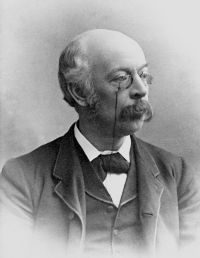
Portrait of Robert Adamson Robert Adamson 1911 Encyclopædia Britannica, Volume 10… (1911)

The faults of existing institutions presented themselves to him in an altogether distorted manner, and he never appears to have recognized that the evils of actual society are immeasurably less serious than the consequences of his arbitrary scheme. Out of the chaos of human passion he supposed harmony was to be evolved by the adoption of a few theoretically disputable principles, which themselves impose restraints even more irksome than those due to actual social facts.
Source: Wikisource

Portrait of Robert Adamson Robert Adamson 1911 Encyclopædia Britannica, Volume 10… (1911)

Psychologically Fourier held what may with some laxity of language be called natural optimism,—the view that the full, free development of human nature or the unrestrained indulgence of human passion is the only possible way to happiness and virtue, and that misery and vice spring from the unnatural restraints imposed by society on the gratification of desire. This principle of harmony among the passions he regarded as his grandest discovery—a discovery which did more than set him on a level with Newton, the discoverer of the principle of attraction or harmony among material bodies.
Source: Wikisource

Portrait of Robert Adamson Robert Adamson 1911 Encyclopædia Britannica, Volume 10… (1911)

Any member of a group may vary his employment at pleasure, may pass from one task to another. The tasks regarded as menial or degrading in ordinary society can be rendered attractive if advantage is taken of the proper principles of human nature: thus children, who have a natural affinity for dirt, and a fondness for “cleaning up,” may easily be induced to accept with eagerness the functions of public scavengers. It is not, on Fourier’s scheme, necessary that private property should be abolished, nor is the privacy of family life impossible within the phalanstère.
Source: Wikisource

Get perspective with Kwize: daily news enlightened by great literature