Summary

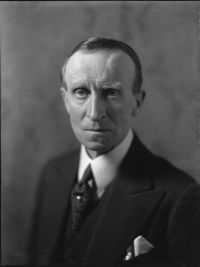
Portrait of John Buchan John Buchan The Empire and the century — The Law and the Constitution (1905)

A brand-new Imperial constitution, disregarding the long-descended and delicate organism which we already possess, would be like a harsh chemical suddenly introduced into the system, and would prove a most potent means of dissolution. Nor must we disregard the elements of union we have ready to our hand. Because federation implies home rule, we must not begin by decreeing autonomy to localities which do not need it. To disjoin in order to unite may be metaphysically justifiable, but it is apt to be politically ruinous.
Source: Wikisource

Portrait of John Buchan John Buchan The Empire and the century — The Law and the Constitution (1905)

If the Empire is destined to grow into self-conscious unity, it is important to see that our theory is adequate to the facts, and that a false constitutional doctrine embodied in too rigid forms does not set a Procrustean barrier to expansion. The pivot of the Empire is the Crown, and the peculiar interpretation of prerogative which is enshrined in our constitutional law. Our constitution, with its elasticity and generous recognition of local freedom, has alone made the Empire possible.
Source: Wikisource

Portrait of John Buchan John Buchan The Empire and the century — The Law and the Constitution (1905)

The House of Lords, indeed, is the final court for the British Isles, but for the Empire beyond the Judicial Committee of the Privy Council is the ultimate appeal The value of this legal uniformity is beyond estimate. It is open to our self-governing Colonies to relinquish their right of appeal, but they do not want to. For, however English statesmanship may be discounted by them, they have never shown a trace of contempt for English law. Indeed, on more occasions than one, it is the Appeal Court rather than the Cabinet which has been held in respect.
Source: Wikisource

Get perspective with Kwize: daily news enlightened by great literature