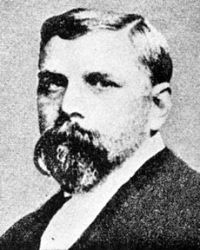
Robert Barr

Robert Barr

Summary

Portrait of Robert Barr Robert Barr Revenge! — "Out of Thun" (1896)

They gazed thus at a young man when he was telling in low whispers how he hoped to make the world wiser and better by his presence in it, or when he narrated some incident of great danger in which he took part, where (unconsciously, perhaps, on the teller's part) his own heroism was shown forth to the best possible advantage. Then Bessie's eyes would grow large and humid and tender, and a subdued light would come into them as she hung breathlessly on his words.
Source: Wikisource

Portrait of Robert Barr Robert Barr Revenge! — "Out of Thun" (1896)

The motive of all great novels must be love, and the culminating point of a love-story is the proposal. In no novel that I have ever read is the proposal well done. Men evidently do not talk to each other about the proposals they make, therefore a man-writer has merely his own experience to go upon, so his proposals have a sameness—his hero proposes just as he himself has done or would do. Women-writers seem to have more imagination in this matter, but they describe a proposal as they would like it to be, and not as it actually is. I find that it is quite an easy thing to get a man to propose.
Source: Wikisource

Portrait of Robert Barr Robert Barr Revenge! — "Out of Thun" (1896)

I think myself the verandah climber is the most sensible man of the lot of us; and, if he has a good imagination, there is no reason why he should be distanced by those you call real climbers, when it comes to telling stories of adventures. Well, this man, who is a most truthful person, took one false step. You know, some amateurs have a vile habit of getting the names of various peaks branded on their alpenstocks—just as if any real climber ever used an alpenstock."
"Why, what do they use?" asked Bessie, much interested.
Source: Wikisource

Get perspective with Kwize: daily news enlightened by great literature