Summary

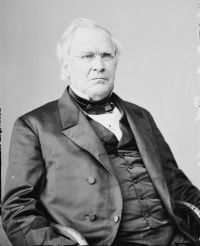
Portrait of Robert Cooper Grier Robert Cooper Grier Bowling v. Harrison — Opinion of the Court

It is true, the jury are the proper judges of the credibility and weight of testimony, but the court should not instruct them to presume or infer important facts, unless there be testimony which, if believed, would justify such a conclusion.
It is of the utmost importance to commercial transactions, that the rules of law on the subject of notice which is to charge an indorser be stable and certain, and not suffered to fluctuate and vary with the notions or caprice of banking corporations or village notaries. A usage, to be binding, should be definite, uniform, and well known.
Source: Wikisource

Portrait of Robert Cooper Grier Robert Cooper Grier Bowling v. Harrison — Opinion of the Court

Where the party noticing and the party noticed reside in different places, the law allows the notice to be sent by post; but one reason of this is, that, in many cases, the notice will be sooner received by post than if otherwise conveyed. The adjudged sufficiency of a notice sent through a letter-carrier or penny-post, though the parties reside in the same city or town, has been sometimes treated as a relaxation of the rule, or an exception to it. It is so, however, only apparently; the letter-carrier or penny-post being treated merely as an agent or messenger for delivering the notice.
Source: Wikisource

Portrait of Robert Cooper Grier Robert Cooper Grier Bowling v. Harrison — Opinion of the Court

Every day's experience shows, that notaries, in many places, fall into loose ways of performing their duties, either through negligence or ignorance; and courts should be cautious how they encourage juries to presume usages and customs contrary to the settled rules of law, in order to sanction the mistakes or misconceptions of careless or incompetent officers.
Source: Wikisource

Get perspective with Kwize: daily news enlightened by great literature