Summary

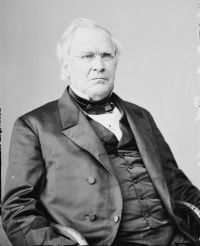
Portrait of Robert Cooper Grier Robert Cooper Grier Cotton v. United States (52 U.S. 229…

Every sovereign State is of necessity a body politic, or artifical person, and as such capable of making contracts and holding property, both real and personal. It is true, that, in consequence of the peculiar distribution of the powers of government between the States and the United States, offences against the latter, as a sovereign, are those only which are defined by statute, while what are called common law offences are the subjects of punishment only by the States and Territories within whose jurisdiction they are committed.
Source: Wikisource

Portrait of Robert Cooper Grier Robert Cooper Grier Cotton v. United States (52 U.S. 229…

But the powers of the United States as a sovereign, dealing with offenders against their laws, must not be confounded with their rights as a body politic. It would present a strange anomaly, indeed, if, having the power to make contracts and hold property as other persons, natural or artificial, they were not entitled to the same remedies for their protection.
Source: Wikisource

Portrait of Robert Cooper Grier Robert Cooper Grier Cotton v. United States (52 U.S. 229…

The restraints of the Constitution upon their sovereign powers cannot affect their civil rights. Although as a sovereign the United States may not be sued, yet as a corporation or body politic they may bring suits to enforce their contracts and protect their property, in the State courts, or in their own tribunals administering the same laws. As an owner of property in almost every State of the Union, they have the same right to have it protected by the local laws that other persons have.
Source: Wikisource

Get perspective with Kwize: daily news enlightened by great literature