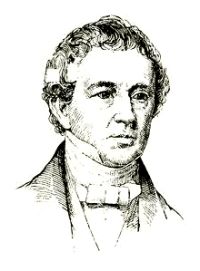
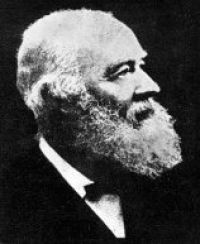
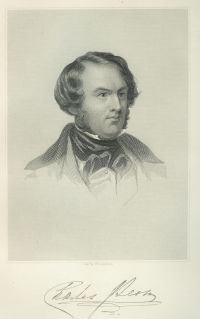
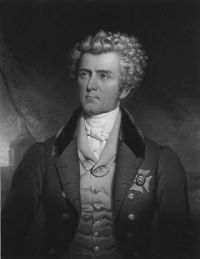
The concept of the "body politic" refers to the collective entity of a society or state, often compared to a living organism to demonstrate its interconnected components and common purpose. This metaphor has been examined by thinkers such as Jean-Jacques Rousseau, who emphasized the "general will" as the ethical basis of political life, and Herbert Spencer, who focused on the relationship between personal needs and group survival.
Authors like Carl Schurz and Alexander Hill Everett further analyzed the mechanisms of governance, justice, and social unity, portraying the body politic as a system in need of equilibrium, fairness, and engagement. These viewpoints together highlight the conflict between personal autonomy and shared duty, illustrating the body politic as both a unifying vision and a delicate structure.
 Herbert Spencer,
Popular Science Monthly
(1876)
Herbert Spencer,
Popular Science Monthly
(1876)