Summary

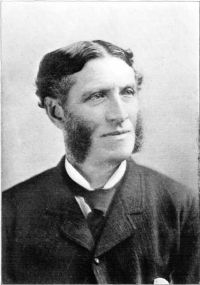
Portrait of Matthew Arnold Matthew Arnold Culture and Anarchy — Chapter II: Doing As One Likes (1882)

And all this time we are in an epoch of expansion; and the essence of an epoch of expansion is a movement of ideas, and the one salvation of an epoch of expansion is a harmony of ideas. The very principle of the authority which we are seeking as a defence against anarchy is right reason, ideas, light. The more, therefore, an aristocracy calls to its aid its innate forces,—its impenetrability, its high spirit, its power of haughty resistance,—to deal with an epoch of expansion, the graver is the danger, the greater the certainty of explosion, the surer the aristocracy's defeat
Source: Wikisource

Portrait of Matthew Arnold Matthew Arnold Culture and Anarchy — Chapter II: Doing As One Likes (1882)

In our common notions and talk about freedom, we eminently show our idolatry of machinery. Our prevalent notion is,—and I quoted a number of instances to prove it,—that it is a most happy and important thing for a man merely to be able to do as he likes. On what he is to do when he is thus free to do as he likes, we do not lay so much stress. Our familiar praise of the British Constitution under which we live, is that it is a system of checks,—a system which stops and paralyses any power in interfering with the free action of individuals.
Source: Wikisource

Portrait of Matthew Arnold Matthew Arnold Culture and Anarchy — Chapter II: Doing As One Likes (1882)

Bradlaugh. And with much justice; owing to the exaggerated notion which we English, as I have said, entertain of the right and blessedness of the mere doing as one likes, of the affirming oneself, and oneself just as it is. People of the aristocratic class want to affirm their ordinary selves, their likings and dislikings; people of the middle class the same, people of the working class the same. By our every-day selves, however, we are separate, personal, at war; we are only safe from one another's tyranny when no one has any power; and this safety, in its turn, cannot save us from anarchy.
Source: Wikisource

Get perspective with Kwize: daily news enlightened by great literature