Summary

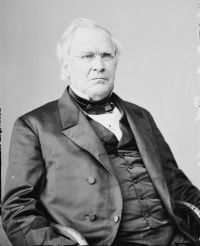
Portrait of Robert Cooper Grier Robert Cooper Grier Girard v. Philadelphia — Opinion of the Court

If the trust for municipal purposes has been forfeited by the acts of the trustees, then by the terms of the will, it is forfeited to the commonwealth. But if it cannot be executed, and if the college is not entitled to take the income, who is entitled to the funds? The commonwealth, as parens patriae. If the devise had been to A. and his heirs, and A. had died without heirs, the estate would not go to the heirs of the testator, but would escheat. There is no reason why, in the case of a devise in trust for a charity, which has vested and taken effect and fails, a different rule should exist.
Source: Wikisource

Portrait of Robert Cooper Grier Robert Cooper Grier Girard v. Philadelphia — Opinion of the Court

In this case the corporation has assented to accept the changes, assume the burdens, and perform the duties imposed upon it; and it is difficult to conceive how they can have forfeited their right to the charities which the law makes it their duty to administer. The objects of the testator's charity remain the same, while the city, large or small, exists; the trust is an existing and valid one, the trustee is vested by law with the estate, and the fullest power and authority to execute the trust.
Source: Wikisource

Portrait of Robert Cooper Grier Robert Cooper Grier Girard v. Philadelphia — Opinion of the Court

But it cannot admit of a doubt that, where there is a valid devise to a corporation, in trust for charitable purposes, unaffected by any question as to its validity because of superstition, the sovereign may interfere to enforce the execution of the trusts, either by changing the administrator, if the corporation be dissolved, or, if not, by modifying or enlarging its franchises, provided the trust be not perverted, and no wrong done to the beneficiaries.
Source: Wikisource

Get perspective with Kwize: daily news enlightened by great literature