Summary

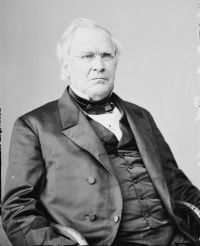
Portrait of Robert Cooper Grier Robert Cooper Grier Glasgow v. Hortiz — Opinion of the Court

The term common-field is of American invention, and adopted by Congress to designate small tracts of ground of a peculiar shape, usually from one to three arpents in front by forty in depth, used by the occupants of the French villages for the purposes of cultivation, and protected from the inroads of cattle by a common fence. The peculiar shape of the lot, its contiguity to others of similar shape, and the purposes to which it was applied, constituted it a common-field lot. It could not be confounded with lots or tracts of land of any other character.
Source: Wikisource

Portrait of Robert Cooper Grier Robert Cooper Grier Glasgow v. Hortiz — Opinion of the Court

The claims of these old villages to their common-field lots, and the peculiar customs regarding them, were well known. Congress, therefore, did not require that any documentary evidence should be filed, nor a report of commissioners thereon. A survey was considered unnecessary, because the several boundaries of each claimant of a lot, and the extent of his possession, was already marked by boundaries, well known among themselves. They required no record in the land office, to give validity to the title. The act is certainly not drawn with much regard to technical accuracy.
Source: Wikisource

Portrait of Robert Cooper Grier Robert Cooper Grier Glasgow v. Hortiz — Opinion of the Court

It passes a present title, proprio vigore, of the property described to the persons designated; a patent to another afterwards, for any of these lands, would be void, because the Government had already released all title and claim thereto. If Congress could not grant them to another, much less could the arbitrary edict, or imperfect performance of a neglected duty by a ministerial officer, operate to divest a clear title by statute.
Source: Wikisource

Get perspective with Kwize: daily news enlightened by great literature