Summary

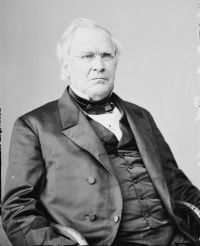
Portrait of Robert Cooper Grier Robert Cooper Grier Post v. Jones — Opinion of the Court

First Point.-The decree of the Circuit Court cannot be sustained, unless, by an unbending rule which admits of no exception or qualification, the power of the master to sell is absolutely limited to a sale by auction, with the advantage of free competition between rival purchasers. If, in any case, or under any circumstances, he may sell by private contract and to a single purchaser, the decree is erroneous.
I. The authority of the master to sell in cases of extreme necessity like the present, is, as a general proposition, definitively settled.
Source: Wikisource

Portrait of Robert Cooper Grier Robert Cooper Grier Post v. Jones — Opinion of the Court

But this argument proves too much, as it would justify every sale to a salvor. Courts of admiralty will enforce contracts made for salvage service and salvage compensation, where the salvor has not taken advantage of his power to make an unreasonable bargain; but they will not tolerate the doctrine that a salvor can take the advantage of his situation, and avail himself of the calamities of others to drive a bargain; nor will they permit the performance of a publid duty to be turned into a traffic of profit.
Source: Wikisource

Portrait of Robert Cooper Grier Robert Cooper Grier Post v. Jones — Opinion of the Court

It cannot be doubted that a master has power to sell both vessel and cargo in certain cases of absolute necessity. This, though now the received doctrine of the modern English and American cases, has not been universally received as a principle of maritime law. The Consulado del Mare (art. 253) allows the master a power to sell, when a vessel becomes unseaworthy from age; while the laws of Oleron and Wisby, and the ancient French ordinances, deny such power to the master in any case.
Source: Wikisource

Get perspective with Kwize: daily news enlightened by great literature