Summary

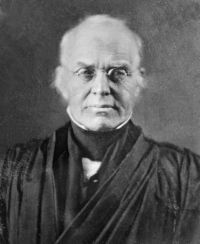
Portrait of Joseph Story Joseph Story Hobart v. Drogan — Opinion of the Court

Indeed, in no just sense can the services of these libellants be deemed to fall within the scope of the duties of pilots. Lord Tenterden, in his excellent Treatise on Shipping (part 2, ch. 5, s. 1, p. 148,) has defined a pilot to be 'a person, taken on board at a particular place, for the purpose of conducting a ship through a river, road, or channel, or from or into a port.' His duty, therefore, is properly the duty to navigate the ship over and through his pilotage limits, or, as it is commonly called, his pilotage ground.
Source: Wikisource

Portrait of Joseph Story Joseph Story Hobart v. Drogan — Opinion of the Court

But, in general, they are distinguishable enough; and the pilot, though he contributes to the safety of a ship, is not to claim as a legal salvor.' From this language it is obvious, that the learned judge had in his mind the distinction between extraordinary pilotage services, and salvage services properly so called; the one clearly going beyond the mere line of duty, and the other going merely to the extreme line of duty.
Source: Wikisource

Portrait of Joseph Story Joseph Story Hobart v. Drogan — Opinion of the Court

We agree to the doctrine stated in the cases cited at the bar, that a pilot, while acting in it in the strict line of his duty, however he may entitle himself to extraordinary pilotage compensation for extraordinary services, as contradistinguished from ordinary pilotage for ordinary services, cannot be entitled to claim salvage. In this respect he is not distinguished from any other officer, public or private, acting within the appropriate sphere of his duty. But a pilot, as such, is not disabled, in virtue of his office, from becoming a salvor.
Source: Wikisource

Get perspective with Kwize: daily news enlightened by great literature