Summary

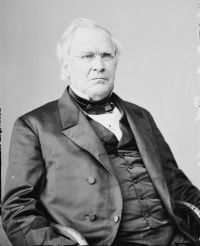
Portrait of Robert Cooper Grier Robert Cooper Grier South v. Maryland — Opinion of the Court

To entitle a citizen to sue on this bond to his own use, he must show such a default as would entitle him to recover against the sheriff in an action on the case. When the sheriff is punishable by indictment as for a misdemeanor, in cases of a breach of some public duty, his sureties are not bound to suffer in his place, or to indemnify individuals for the consequences of such a criminal neglect.
It is an undisputed principle of the common law, that for a breach of a public duty, an officer is punishable by indictment
Source: Wikisource

Portrait of Robert Cooper Grier Robert Cooper Grier South v. Maryland — Opinion of the Court

He may upon view, without writ or process, commit to prison all persons who break the peace or attempt to break it; he may award process of the peace, and bind any one in recognizance to keep it. He is bound, ex officio, to pursue and take all traitors, murderers, felons, and other misdoers, and commit them to jail for safe custody. For these purposes he may command the posse comitatus or power of the country; and this summons, every one over the age of fifteen years is bound to obey, under pain of fine and imprisonment.
Source: Wikisource

Portrait of Robert Cooper Grier Robert Cooper Grier South v. Maryland — Opinion of the Court

Originally, the office of sheriff could be held by none but men of large estate, who were able to support the retinue of followers which the dignity of his office required, and to answer in damages to those who were injured by his neglect of duty in the performance of his ministerial functions. In more modern times, a bond with sureties supplies the place of personal wealth.
Source: Wikisource

Get perspective with Kwize: daily news enlightened by great literature