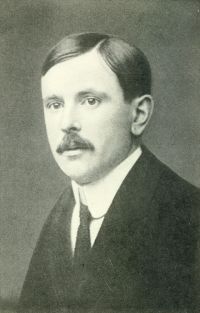
Robert William Seton-Watson

Robert William Seton-Watson

Summary

Portrait of Robert William Seton-Watson Robert William Seton-Watson The New Europe (1917)

The World War has brought this sham-theocratic system to a state of final bankruptcy and moral discredit. “Caesaropapism” is dead, and the dynasts of Central Europe are left as sole mourners at the funeral. The evolution of the Russian people has been long and painful, and we must still be prepared for terrible crises and perhaps even serious set-backs; but only the ignorant or the wilfully blind can deny that it has reached its majority and can be trusted to work out its own destinies.
Source: Wikisource

Portrait of Robert William Seton-Watson Robert William Seton-Watson The New Europe (1917)

For the Ukraine, as for all the nationalities of the Russian Empire, the Revolution of 1905 was the bursting of a dam behind which had gathered the pent-up forces of many generations. In South Russia the democratic movement at once assumed a national Ukrainian form, and its swift progress surprised even its own adherents. After thirty years of utter suppression there suddenly sprang up a flourishing Ukrainian press at Kiev, Harkov, Odessa, Poltava, Yekaterinoslav, and Mohilev.
Source: Wikisource

Portrait of Robert William Seton-Watson Robert William Seton-Watson The New Europe (1917)

The philosopher, Čaadajev, held that “a day would come when the Russians would find a place in the midst of intellectual Europe, as we already stand in the midst of political Europe; more powerful then by virtue of our intelligence than we are to-day by virtue of our material strength.” The union of Rasputinism at home and Prussianism in foreign policy has sought desperately to hold Russia in shackles and to obscure the political outlook by mysticist theories which scarcely ruffle the surface of reality.
Source: Wikisource

Get perspective with Kwize: daily news enlightened by great literature