Summary

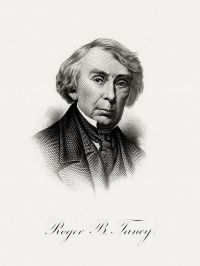
Portrait of Roger B. Taney Roger B. Taney Brown v. Shannon — Opinion of the Court

From the manner in which the bill is framed, there is some difficulty in determining whether the complainants are seeking the aid of this court to prohibit the infringement of a patent right assigned to them, or to enforce the specific execution of two contracts with the appellant, exhibited with the bill; for the right claimed under the patent, and the right claimed under the contracts, are so mingled together in the statements and allegations of the complainants as to leave some doubt upon that point.
Source: Wikisource

Portrait of Roger B. Taney Roger B. Taney Brown v. Shannon — Opinion of the Court

It is to prevent the fraudulent violation of these contracts, therefore, that the complainants seek the aid of the court, and ask for an injunction; and it being a proceeding founded on a contract between the parties, this court has no appellate power, unless the matter in controversy is of the value on more than two thousand dollars. Now, the matter in controversy is the right of the appellants to use these five machines while the Woodworth patent continued-that is, until the 29th of December, 1856.
Source: Wikisource

Portrait of Roger B. Taney Roger B. Taney Brown v. Shannon — Opinion of the Court

The court could not foresee whether this would be the case or not, and hence the necessity and propriety of prescribing a penalty that would cover all possible contingencies. The respondent, however, as we have said, admits that he sold the privilege now in dispute for the sum mentioned in the bill, and does not say that it was worth more, or was of greater value in his hands than in those of Griffiss & Cate.
Source: Wikisource

Get perspective with Kwize: daily news enlightened by great literature