Summary

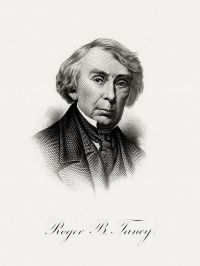
Portrait of Roger B. Taney Roger B. Taney Bruce v. United States — Opinion of the Court

Undoubtedly the sureties in the second term of office are not responsible for a default committed in his first. But if any part of the balance now claimed from him was misapplied during that period, it was incumbent on the plaintiffs in error to prove it. No officer, without proof, will be presumed to have violated his duty; and if Bruce had done so, Steele had a right, under the opinion of the circuit court, to show it and exonerate himself to that amount
Source: Wikisource

Portrait of Roger B. Taney Roger B. Taney Bruce v. United States — Opinion of the Court

Nor do we see how any valid objection can be made to the items charged against Bruce in the transcript. The books of the accounting officer necessarily contain the charges against, as well as the credits of, the disbursing officer. The accounts could not be adjusted on the books in any other manner; and the transcript, or, in other words, the copy of the entire account as it stands on the books, (which must include debits as well as credits,) are made evidence by the law.
Source: Wikisource

Portrait of Roger B. Taney Roger B. Taney Bruce v. United States — Opinion of the Court

At the trial, the United States offered in evidence a transcript from the books of the treasury department, stating the account of Bruce from the time of his first appointment. According to this account, the balance above mentioned was due to the United States, but Bruce claimed various additional credits, amounting altogether to $6,931.68, which had been disallowed or suspended by the accounting officers, as appears by the closing account, usually called the statement of differences.
Source: Wikisource

Get perspective with Kwize: daily news enlightened by great literature