Summary

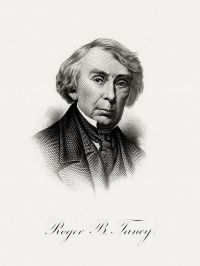
Portrait of Roger B. Taney Roger B. Taney Lessee of Waller v. Best — Opinion of the Court

And whatever doubts might before have been entertained, we must, under the authority of this case, regard it as the settled law of the state, that the creditor obtains a lien upon the property of his debtor by the delivery of the fieri facias to the sheriff; that it acquires no additional validity or force by being actually levied, but that the lien is as absolute before the levy as it is afterwards, and continues while the process remains in the hands of the sheriff to be executed.
Source: Wikisource

Portrait of Roger B. Taney Roger B. Taney Lessee of Waller v. Best — Opinion of the Court

The action of some creditor was necessary to bring about the decree in bankruptcy; it is, therefore, the effort of the creditor, not of the defendant in the execution, which brings about the decree. The investiture of the rights of the debtor in the assignee is the act of the law, and the effect of the action of one or more creditors, for his own benefit and that of other creditors; and the result of this conclusion is, that there is a pro rata distribution of the bankrupt's property, rather than the appropriation of the whole to a single creditor.
Source: Wikisource

Portrait of Roger B. Taney Roger B. Taney Lessee of Waller v. Best — Opinion of the Court

This is the law, as understood by the counsel, in contests between execution creditors in Kentucky: and it is insisted that the case of a petitioning creditor in bankruptcy is analagous to that of an execution creditor, and that the filing of the petition by a creditor is tantamount to the levy of an execution: it is a proceeding by which a lien is acquired by the assignee, for the benefit of the general creditors, and will oust any such inchoate lien as that relied on as arising from an execution not in fact levied.
Source: Wikisource

Get perspective with Kwize: daily news enlightened by great literature