Summary

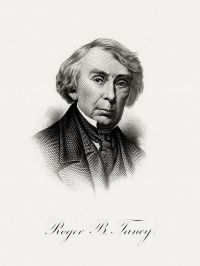
Portrait of Roger B. Taney Roger B. Taney United States v. Carr (49 U.S. 1…

The certificate of the collector at New York does not heal this defect. He is only authorized to certify in case all the requisitions of law are complied with. If his certificate is conclusive, then he is invested with judicial power, and neither the collector of the port to which the vessel is going, nor the district judge, can properly interfere. The manifest is no longer subject to their supervision; although the authority of the first collector to certify is limited to the case of previous compliance with the law on the part of the master.
Source: Wikisource

Portrait of Roger B. Taney Roger B. Taney United States v. Carr (49 U.S. 1…

We do not think it material to inquire whether the manifest did or did not describe with legal precision the foreign merchandise which the master had taken on board when he sailed from New York. For if the manifest be liable to that objection, the 16th section, which prescribes the manner in which foreign merchandise shall be specified in the manifest, punishes the omission by a small pecuniary penalty on the master: but does not forfeit the goods.
Source: Wikisource

Portrait of Roger B. Taney Roger B. Taney United States v. Carr (49 U.S. 1…

From this last-mentioned decree the United States appealed to this court.
The Hope W. Gaudy was regularly licensed to carry on the coasting trade; and the goods in question were part of a cargo shipped at New York for the port of St. Augustine. The master of the schooner, previous to his sailing from New York, delivered a manifest of his cargo to the collector, in which the goods seized were included, with the proper affidavit annexed; and the collector indorsed upon it the certificate and permit to proceed on the voyage, as required by the act of February 18, 1793.
Source: Wikisource

Get perspective with Kwize: daily news enlightened by great literature