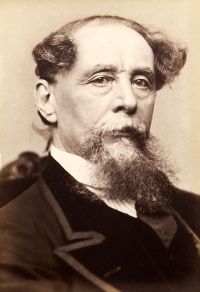
 Charles Dickens,
A Tale of Two Cities
(1859)
Charles Dickens,
A Tale of Two Cities
(1859)
“ Among these, accordingly, much discoursing with spirits went on—and it did a world of good which never became manifest. ”
The concept of "manifest" denotes what is clearly evident or expressed, encompassing both tangible realities and abstract ideals. From Charles Dickens’ observation of actions yielding visible outcomes to Hegel’s philosophical exploration of externalization as "Nature in general," the theme reveals diverse dimensions.
Bahá'u'lláh elevates it to divine revelation, framing spiritual disclosures as foundational to human existence. Authors from literature, theology, and philosophy alike employ the term to bridge the seen and the unseen, reflecting its versatility as a lens for understanding existence. This interplay of perspectives underscores the term’s capacity to unify disparate domains under a shared quest for clarity.
Charles Dickens,
A Tale of Two Cities
(1859)
“ Among these, accordingly, much discoursing with spirits went on—and it did a world of good which never became manifest. ”
 Charles Kingsley,
Sermons for the Times
Charles Kingsley,
Sermons for the Times
“ For whatsoever is made manifest is light. Our version says; ‘Whatsoever makes manifest is light.’ That is true, a noble truth; but I should not be honest, if I did not confess that that is not what St. ”
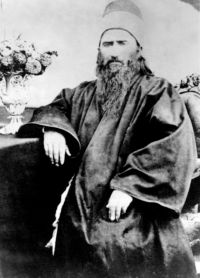 Bahá'u'lláh,
Gleanings from the Writings of Bahá'u'lláh
Bahá'u'lláh,
Gleanings from the Writings of Bahá'u'lláh
“ And of all men, the most accomplished, the most distinguished, and the most excellent are the Manifestations of the Sun of Truth. Nay, all else besides these Manifestations, live by the operation of Their Will, and move and have their being through the outpourings of Their grace. ”
G. W. F. Hegel, Lectures on the Philosophy of Religion…
“ As for manifestation generally, or abstract manifestation, it is Nature in general. Manifestation is Being for Other, an externalisation of things mutually distinct, and one, in fact, which is immediate and not yet reflected into itself. ”
 Harriet Beecher Stowe,
A Key to Uncle Tom's Cabin
(1853)
Harriet Beecher Stowe,
A Key to Uncle Tom's Cabin
(1853)
“ A learned and philosophical exposure of the modern belief in Spiritual Manifestations, showing, most conclusively, that we need not go to the spirit world to account for those things, but that they can all be explained by human agency, and upon philosophical principles. ”
 Johann Gottlieb Fichte,
The Vocation of Man — Book One…
(1846)
Johann Gottlieb Fichte,
The Vocation of Man — Book One…
(1846)
“ The reference of my being, and of all the determinations of my being, to a cause out of myself,—the manifestations of which were again determined by other causes external to itself,—this it was from which I so violently recoiled. ”
Universal House of Justice, A Compilation on Bahá'í Education
“ The Manifestations of God, on the other hand, affirm that differences are demonstrably and indisputably innate, and that “We have caused some of you to excel others”6 is a proven and inescapable fact. ”
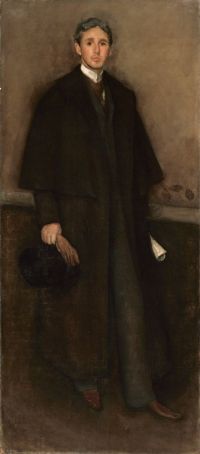 Arthur Jerome Eddy,
Cubists and Post-Impressionism
Arthur Jerome Eddy,
Cubists and Post-Impressionism
“ At certain times our inner forces—impulses—mature and the result is a longing to create something, and we try to find a material form—manifestation—for the new value that exists in us in spiritual or intellectual form. ”
 Augustus Hopkins Strong,
Systematic Theology (Volume 2 of 3…
Augustus Hopkins Strong,
Systematic Theology (Volume 2 of 3…
“ For manifestly these senses unite into one nature, call it the soul or what you will. And it is with this central form, through the organs of sense, that we perceive sensible objects.”Dewey, Psychology, 21—“Knowledge and feeling are partial aspects of the self, and hence more or less abstract, while will is complete, comprehending both aspects.... ”
Charles Dickens,
Martin Chuzzlewit
(1844)
“ A manifestation so lively, brought to their immediate recollection the great virtuous precept, ‘Keep up appearances whatever you do,’ in which they had been educated. ”
 Nathaniel Hawthorne,
The Marble Faun; Or, The Romance of Monte Beni - Volume 2
Nathaniel Hawthorne,
The Marble Faun; Or, The Romance of Monte Beni - Volume 2
“ It supplies a multitude of external forms, in which the spiritual may be clothed and manifested; ”
Ralph W. Page, Dramatic Moments in American Diplomacy (1918)
“ A superior nation has the right, if not the duty, of compelling an inferior nation to adopt such ideas of government, justice, and customs as it may decree, and to open its territories to the use, and its resources to the benefit of the superior nation. Particularly the latter. The creed is that "manifest destiny" makes such physical and political domination inevitable in the interests of civilization, and "progress." ”
 Josiah Royce,
The Sources of Religious Insight
Josiah Royce,
The Sources of Religious Insight
“ As a result we shall soon find that, just as our first statement of the insight of reason, if indeed it is a true statement, transforms our view of the sense in which the world is real, so a deeper study of the relations of insight to action transforms our first cruder notion of the reason itself, of its office in life, and of the truth that it reveals. ”
David Masson, The Three Devils: Luther's, Milton's…
“ Soul, mind, spirit, these old and simple words are the strongest, the profoundest, the surest; age cannot antiquate them, nor science undo them; they last with the rocks, and still go beyond. But, having in view rather the operation than the cause, we find a use also in such alternative phrases as “mode of thinking,” “mode of feeling and thinking,” “habit of thought,” “moral and intellectual character or constitution,” and the like. ”
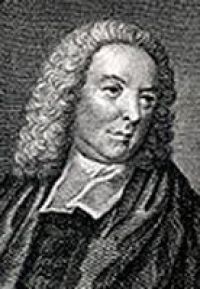 Edward Young,
Young's Night Thoughts
Edward Young,
Young's Night Thoughts
“ To faith, and virtue, why so backward, man?From hence:—the present strongly strikes us all; 1430The future, faintly: can we, then, be men?If men, Lorenzo! the reverse is right.Reason is man’s peculiar: Sense, the brute’s.The present is the scanty realm of Sense;The future, Reason’s empire unconfined:On that expending all her godlike power,She plans, provides, expatiates, triumphs, there;There, builds her blessings; there, expects her praise;And nothing asks of Fortune, or of men.And what is Reason? Be she thus defined; 1440Reason is upright stature in the soul. ”
Henry Giles, Unitarianism Defended
“ How shall I rise through words, which are mere symbols, to conceptions, which, not being in my own soul, mere words do not suggest? If I saw a living being embodying these sublime conceptions before me, or read a description of him that brought him vividly before the soul, then the words would be no longer clothed with my poor meanings, but would bring before me the living forms of goodness and of greatness into which they expanded when represented by that heavenly mind. ”
Josiah Royce,
The World and the Individual, First Series
(1899)
“ It is just because all meanings, in the end, will prove to be internal meanings, that this which the internal meaning most loves, namely the presence of concrete fulfilment, of life, of pulsating and originative will, of freedom, and of individuality, will prove, for our view, to be of the very essence of the Absolute Meaning of the world. ”
Josiah Royce,
The World and the Individual, First Series
(1899)
“ We are to assert that just what the internal meaning already imperfectly but consciously is, namely, purpose relatively fulfilled, just that, and nothing else, the apparently external meaning when truly comprehended also proves to be, namely, the entire expression of the very Will that is fragmentarily embodied in the life of the flying conscious idea, — the fulfilment of the very aim that is hinted in the instant. ”
Alexander Campbell Fraser, Thomas Reid (1898)
“ The inspirations or revelations of the common sense, in and through which the Almighty Power gives us an understanding of the life and world in which we find ourselves, inspirations in which all men are believed more or less to participate, require us to distinguish the solid and extended pin, as something public or outward, in contrast to the private feeling of pain, of which no one except the person who feels it is conscious. ”
Freiherr von Friedrich Hügel, The Mystical Element of Religion…
“ For we find here that all the activities of specifically human life begin with a sense-impression, as the first, the one simply given element; that they move into and through a central process of mental abstraction and reflection, as the second element, contributed by the mind itself; and that they end, as the third element, in the discharge of will [58] and of action, in an act of free affirmation, expansion, and love. ”
 James Lane Allen,
Flute and Violin and Other Kentucky Tales and Romances
(1891)
James Lane Allen,
Flute and Violin and Other Kentucky Tales and Romances
(1891)
“ But if the history of any human soul could be perfectly known, who would wish to describe this passage from the dawn of the ideal to the morning of the real—this transition from life as it is imagined through hopes and dreams to life as it is known through action and submission? ”
Josiah Royce,
The World and the Individual, First Series
(1899)
“ This negative character of the universal judgments holds true of them, as we have said, just in so far as you sunder the external and the internal meanings, and just in so far as you view the Real as the Beyond, and as merely the Beyond. If you turn your attention once more to the realm of the ideas viewed as internal meanings, you see, indeed, that they are constantly becoming enriched, in their inner life, by all this process. ”
 Octavius Brooks Frothingham,
Transcendentalism in New England…
Octavius Brooks Frothingham,
Transcendentalism in New England…
“ This faculty is reason,—the supreme faculty, above sensibility, above understanding. Reason gives the final generalization, the idea of a universe comprehending the infinitude of details presented by the senses, and the worlds of knowledge shaped by the understanding; the idea of a personality embracing the infinite complexities of feeling, and gathering under one dominion the realms of consciousness; the idea of a supreme unity combining in itself both the other ideas; the absolute perfection, the infinite and eternal One, which men describe by the word God. ”
William James, The Philosophical Review (1892)
“ Now the sort of 'fact of experience' on which in my book I have proposed to compromise, is the so-called 'mental state,' in whose existence not only common men but philosophers have uniformly believed. ”
 Ralph Waldo Trine,
What All The World's A-Seeking
Ralph Waldo Trine,
What All The World's A-Seeking
“ Every act is preceded and given birth to by a thought, the act repeated forms the habit, the habit determines the character, and character determines the life, the destiny,—a most significant, a most tremendous truth: thought on the one hand, life, destiny, on the other. ”
 James Frederick Ferrier,
Blackwood's Magazine
(1842)
James Frederick Ferrier,
Blackwood's Magazine
(1842)
“ I assent to the veracity of sense, and I believe that the very perception or sensible image is the external object, and on no account whatever will I consent 'to disclaim this principle.' Your philosophy—your more rational opinions— representation—your reasonings which, you say, necessitate me to depart from my primary instincts—all these I give, without reservation, to the winds. ”
 Ralph Waldo Emerson,
Nature
(1836)
Ralph Waldo Emerson,
Nature
(1836)
“ This universal soul, he calls Reason: it is not mine or thine or his, but we are its; we are its property and men. And the blue sky in which the private earth is buried, the sky with its eternal calm, and full of everlasting orbs, is the type of Reason. ”
Alexander Campbell Fraser, Thomas Reid
“ Is it, in its final and pervading Power, a bad or a good sort of universe that we open our eyes upon, when we begin to exercise our senses? What are its final relations to me, and my final relations to it? Nobody doubts the existence of things and persons, so far as they are revealed to the senses. But what is our implied Common Sense of the final meaning of the Whole? ”
 John Wesley,
The works of the Rev. John Wesley…
(1771)
John Wesley,
The works of the Rev. John Wesley…
(1771)
“ IT is the intent of this chapter to shew, that altho’ common language ascribes a variety of faculties and principles to the soul, imputing this action to the blindness of our passions, that to the inconstancy of our tempers; one thing to the heat of our imagination, another to the coolness of our reason; yet, in strictness of truth, every thing that is done by us, is the action and operation of our reason, and is to be ascribed to it, as the sole principle from whence it proceeded, and by which it is governed and effected. ”
Fernand Papillon, Popular Science Monthly (1874)
“ Thus, and this is the conclusion at which we aim, it is in the soul, regarded as the focus of all those rays refracted through the senses, as the central light outshining all others, that we must set the power and the right to discern what the senses do not discern, and to pierce to a depth forever beyond their reach. ”
 Laurence Housman,
Ploughshare and Pruning-hook
(1919)
Laurence Housman,
Ploughshare and Pruning-hook
(1919)
“ The Image of God was not seated in the features of your face but in the lineaments of your soul. In the knowledge of your powers, inclinations, and principles, the knowledge of yourself chiefly consisteth. ”
Josiah Royce,
The World and the Individual, Second Series
(1901)
“ What I say is that our present recognition of the concrete things in which we all believe is not a mere acceptance of any content of sense, but does include an intention to act, and does fulfil, as far as it goes, a purpose, and our own conscious purpose. ”
William James, The Varieties of Religious Experience (1902)
“ But solemnity, and gravity, and all such emotional attributes, admit of various shades; and, do what we will with our defining, the truth must at last be confronted that we are dealing with a field of experience where there is not a single conception that can be sharply drawn. ”
William James, The Will to Believe, and Other Essays in Popular Philosophy
“ I mean by this that the conceiving or theorizing faculty—the mind's middle department—functions exclusively for the sake of ends that do not exist at all in the world of impressions we receive by way of our senses, but are set by our emotional and practical subjectivity altogether. [2] It is a transformer of the world of our impressions into a totally different world,—the world of our conception; and the transformation is effected in the interests of our volitional nature, and for no other purpose whatsoever. ”
Josiah Royce,
The Sources of Religious Insight
“ But the universal form in which any opinion comes to your consciousness, and gets its definition for your own mind, is this form of an appeal to an insight that is superior in grasp, in unity, in coherence, in reasonableness to your momentary insight. ”
Johann Gottlieb Fichte,
Sun-Clear Statement — First Conversation
(1868)
“ To begin, you surely know how to distinguish the really actual, that which is the true fact of your present experience and life, or that which you actually live and experience, from the non-actual, the merely imagined. ”
Josiah Royce,
The Conception of God
(1897)
“ This generalised form of attention, which we attribute to the Absolute Experience, is now conceived by us as that aspect of this Absolute which, in the total movement of the world’s unity, determines the ideas to find this concrete realisation which they do find. ”
Theodore P. Wilson, True to his Colours
“ Practical good sense, the fruit of a plain scriptural creed thought out, prayed out, and lived out, in the midst of a thousand unrealities, and half-realities, and distortions of the truth in belief and practice, was the habitual utterance of her lips and guide of her daily life. ”
Josiah Royce,
The World and the Individual, Second Series
(1901)
“ Our whole argument in our transition to the Fourth Conception of Being illustrated how it is of the very nature of our human experience of our Internal Meaning to point beyond what is presented, for the sake of defining the very fulfilment which our presented meanings demand, and without which they have neither truth nor Being. ”
 William G. T. Shedd,
Sermons to the Natural Man
William G. T. Shedd,
Sermons to the Natural Man
“ If the beauty of virtue, and the grandeur of truth, and the sublimity of invisible things, have been able to make such an impression upon your intellects, and your tastes,—upon that part of your constitution which is fixed and stationary, which responds organically to such objects, and which is not the seat of moral character,—then why is there not a corresponding influence and impression made by them upon your heart? ”
 G. E. Moore,
Philosophical Studies
G. E. Moore,
Philosophical Studies
“ And other philosophers have suggested that what we mean by "real" is—"connected in some way with a purpose—helping or hindering, or the object of a purpose." But if we look into their meaning, we find they mean—connected with a real purpose. ”
 Jonathan Edwards,
Selected Sermons of Jonathan Edwards
Jonathan Edwards,
Selected Sermons of Jonathan Edwards
“ But if we take reason strictly, not for the faculty of mental perception in general, but for ratiocination, or a power of inferring by arguments; I say, if we take reason thus, the perceiving of spiritual beauty and excellency no more belongs to reason than it belongs to the sense of feeling to perceive colors, or to the power of seeing to perceive the sweetness of food. ”
Josiah Royce,
The World and the Individual, First Series
(1899)
“ Whoever denies this conception covertly, so we affirm, asserts it whenever, expressly or by implication, he talks of Being at all. For to talk of Being is to speak of fact that is either present to a consciousness or else is nothing. And from that one aspect of our definition which is involved in the thesis that whatever is, is consciously known, all the foregoing view of the unity of Being inevitably follows. ”
 John Cowper Powys,
The Complex Vision
John Cowper Powys,
The Complex Vision
“ It is still the mandate of conscience. But it is the mandate of a conscience whose search-light has been taken possession of by the aesthetic sense and has been fed by imagination, instinct and intuition. ”
Modern Eloquence: Vol III, After-Dinner Speeches P-Z
“ They are the outward and visible expressions of two distinct and supplementary portions of our complex human nature—distinct, but [Pg 1161] not opposed, the one working by the dry light of the intellect, the other in the warm glow of the emotions; the one ever seeking to interpret and express the beauty of the universe, the other ever searching for its truth. ”
 Aurobindo Ghose,
Essays On The Gita
(1922)
Aurobindo Ghose,
Essays On The Gita
(1922)
“ But if we look behind to the spirit and sense and not at the local name and temporal institution, we see that here too the sense is deep and true and the spirit philosophical, spiritual and universal. ”
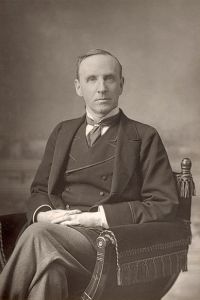 John Morley,
Critical Miscellanies (Vol 2 of 3…
John Morley,
Critical Miscellanies (Vol 2 of 3…
“ Let us rend the melancholy veil which hides from our eyes the eternal chain of the world and the glory of the Creator.... External objects form ideas in the mind, these ideas form sentiments, these sentiments volitions, these volitions actions in ourselves and outside of ourselves. ”
 Jean Paul,
Titan: A Romance. v. 1 (of 2)
Jean Paul,
Titan: A Romance. v. 1 (of 2)
“ Yes, O God, Thou wilt and canst give us one day a reality, which shall embody and redouble and satisfy our present ideals,—as thou hast, indeed, already proved to us, in our love here below, [Pg 267] which intoxicates us with moments in which the inner becomes the outer, and the Ideal, Reality ”
