Summary

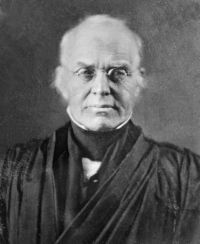
Portrait of Joseph Story Joseph Story Barlow v. United States — Opinion of the Court

There is scarcely any law, which does not admit of some ingenious doubt; and there would be perpetual temptations to violations of the laws, if men were not put upon extreme vigilance to avoid them. There is not the least reason to suppose, that the legislature, in this enactment, had any intention to supersede the common principle. The safety of the revenue, so vital to the government, is essentially dependent upon upholding it.
Source: Wikisource

Portrait of Joseph Story Joseph Story Barlow v. United States — Opinion of the Court

For mistakes of fact, the legislature might properly indulge a benignant policy, as they certainly ought, to accidents. The very association of mistake and accident, in this connection, furnishes a strong ground to presume, that the legislature had the same classes of cases in view; accident, which no prudence could foresee or guard against, and mistakes of fact, consistent with entire innocence of intention.
Source: Wikisource

Portrait of Joseph Story Joseph Story Barlow v. United States — Opinion of the Court

Sugars have been made subject to duties upon their importation, from the first establishment of the government down to the present time, in every tariff law; and it is notorious, that until after the acquisition of Louisiana, in 1803, no sugars were grown in the United States; and consequently, all that were used or refined within the United States must have been of foreign growth and importation.
Source: Wikisource

Get perspective with Kwize: daily news enlightened by great literature