Summary

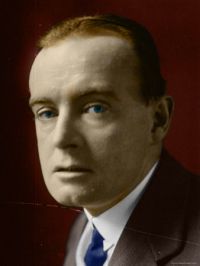
Portrait of Saki Saki The Toys of Peace and Other Papers… (1919)

The lively beat of a drum disclosed the fact that the master of the revels remained on the scene.
Bertie!” came in an angry, imploring chorus of shouts and screams from the cow-house window.
“Hullo,” cried the owner of the name, turning his rather errant steps in the direction of the summons; “are you people still there? Must have heard everything cows got to say by this time. If you haven’t, no use waiting. After all, it’s a Russian legend, and Russian Chrismush Eve not due for ’nother fortnight. Better come out.”
Source: Wikisource

Portrait of Saki Saki The Toys of Peace and Other Papers… (1919)

Its vocal efforts in the direction of carol singing were now supplemented by instrumental music; a Christmas-tree that had been prepared for the children of the gardener and other household retainers had yielded a rich spoil of tin trumpets, rattles, and drums. The life-story of King Wenceslas had been dropped, Luke was thankful to notice, but it was intensely irritating for the chilled prisoners in the cow-house to be told that it was a hot time in the old town to-night, together with some accurate but entirely superfluous information as to the imminence of Christmas morning.
Source: Wikisource

Portrait of Saki Saki The Toys of Peace and Other Papers… (1919)

A motor-load of youthful “bloods,” in a high state of conviviality, had made a temporary halt for repairs; the stoppage, however, did not extend to the vocal efforts of the party, and the watchers in the cow-shed were treated to a highly unauthorised rendering of “Good King Wenceslas,” in which the adjective “good” appeared to be very carelessly applied.
The noise had the effect of bringing Bertie out into the garden, but he utterly ignored the pale, angry faces peering out at the cow-house window, and concentrated his attention on the revellers outside the gate.
Source: Wikisource

Get perspective with Kwize: daily news enlightened by great literature